
How Many Days in Yellowstone? The Perfect Itinerary for Every Type of Traveler
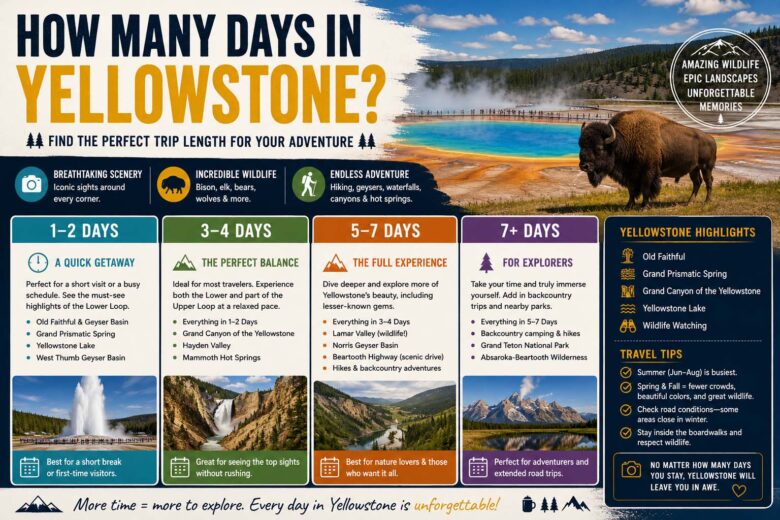
If you’re wondering how many days in Yellowstone you should plan for, the short answer is three to four days. That gives you enough time to see the park’s famous geysers, waterfalls, wildlife, and scenic drives without feeling rushed. Still, the perfect trip length depends on your interests, travel style, and whether Yellowstone is your only destination or part of a larger road trip.
Yellowstone National Park is the oldest national park in the United States and covers more than 2.2 million acres across Wyoming, Montana, and Idaho. With hundreds of miles of roads, dozens of geothermal areas, and countless hiking trails, it’s impossible to see everything in one visit. Planning the right amount of time helps you enjoy the highlights while leaving room for unexpected wildlife sightings and scenic stops.
How Many Days in Yellowstone Is Enough?
The answer depends on what you hope to experience.
| Trip Length | Best For | What You’ll See |
|---|---|---|
| 1 Day | Quick stop | Old Faithful, Grand Prismatic Spring, a scenic drive |
| 2 Days | Weekend visitors | Major geothermal areas and Yellowstone Lake |
| 3 Days | First-time visitors | Most top attractions at a relaxed pace |
| 4 Days | Nature lovers | Highlights plus hiking and wildlife viewing |
| 5+ Days | Outdoor enthusiasts | Full park exploration with lesser-known areas |
For most travelers asking how many days do you need in Yellowstone, three days offers the best balance between sightseeing and relaxation. You’ll have enough time to explore both the Upper and Lower Loop roads without spending every hour behind the wheel.
If your vacation includes multiple western national parks, consider comparing your schedule with our guide to the best time to visit zion national park to plan a road trip that matches seasonal conditions across destinations.
Why Yellowstone Takes Longer Than You Might Expect
Many first-time visitors underestimate Yellowstone’s size.
Although the park looks manageable on a map, driving between attractions often takes longer than expected. Roads have relatively low speed limits, traffic slows during wildlife sightings, and weather conditions can affect travel times.
It’s common to spend two to three hours driving in a single day, even when visiting only a handful of attractions.
That’s why building flexibility into your itinerary makes the experience much more enjoyable.
How Many Days in Yellowstone National Park for First-Time Visitors?
If you’ve never visited before, aim for three full days.
This schedule lets you experience Yellowstone’s most famous attractions while still having time to enjoy the scenery rather than rushing from one viewpoint to another.
During three days, most visitors can comfortably explore:
- Old Faithful
- Grand Prismatic Spring
- Mammoth Hot Springs
- Norris Geyser Basin
- Yellowstone Lake
- Hayden Valley
- Lamar Valley
- Grand Canyon of the Yellowstone
- Artist Point
- Tower Fall
You’ll also have opportunities to stop at smaller geothermal features, visitor centers, picnic areas, and scenic overlooks along the way.
Suggested Yellowstone Itineraries
One-Day Yellowstone Itinerary
If you only have one day, focus on the park’s most iconic sights.
Suggested route:
- Enter through the West Entrance
- Visit Old Faithful
- Explore the Upper Geyser Basin
- Stop at Grand Prismatic Spring
- Drive through the Lower Geyser Basin
- Finish with the Fountain Paint Pot area before leaving the park
You’ll cover many of Yellowstone’s signature geothermal attractions, though you’ll miss much of the wildlife-rich northern region.
Two-Day Yellowstone Itinerary
Two days gives you time to divide the park into two sections.
Day One
- Old Faithful
- Grand Prismatic Spring
- Biscuit Basin
- Yellowstone Lake
Day Two
- Grand Canyon of the Yellowstone
- Artist Point
- Hayden Valley
- Mammoth Hot Springs
This itinerary reduces driving fatigue and gives you more opportunities to stop whenever something catches your eye.
Three-Day Yellowstone Itinerary
For travelers asking how many days to spend in Yellowstone, this is often the sweet spot.
Day One: Upper Geyser Basin and western attractions
Day Two: Canyon area, waterfalls, and Yellowstone Lake
This approach allows you to see nearly all of Yellowstone’s famous landmarks while keeping daily driving manageable.
Which Areas Deserve the Most Time?
Not every part of Yellowstone requires the same amount of time.
Upper Geyser Basin
This is where you’ll find Old Faithful and one of the world’s largest concentrations of geysers.
Plan to spend at least half a day walking the boardwalks and watching eruptions.
Grand Prismatic Spring
The park’s most photographed hot spring deserves more than a quick stop.
Walking the boardwalk provides an up-close view, while the nearby overlook offers the colorful panoramic perspective seen in many travel photos.
Grand Canyon of the Yellowstone
The canyon features dramatic cliffs, waterfalls, and several scenic viewpoints.
Most visitors spend two to four hours exploring this area.
Hayden and Lamar Valleys
These valleys are famous for wildlife.
Early mornings and evenings offer the best chances to spot:
- Bison
- Elk
- Wolves
- Bears
- Coyotes
- Bald eagles
Wildlife traffic can slow driving considerably, but many travelers consider these unexpected stops among the highlights of their trip.
Best Time of Year Based on Your Trip Length
The season you choose affects how much you can realistically see.
Summer (June to August)
Summer offers:
- All park roads open
- Maximum daylight
- Ranger programs
- Warm hiking weather
It’s also the busiest season, so longer trips help offset traffic delays.
Fall (September to October)
Many experienced travelers prefer early fall because:
- Wildlife becomes more active.
- Crowds begin to shrink.
- Cooler temperatures make hiking comfortable.
- Fall colors add beautiful scenery.
If your vacation includes several mountain destinations, comparing conditions with the best time to visit colorado can help you plan a broader western U.S. itinerary around similar weather patterns.
Spring and Winter
Spring brings newborn wildlife and powerful waterfalls fueled by snowmelt, although some roads remain closed.
Winter transforms Yellowstone into a snowy landscape where travel is limited to guided snowcoach tours, snowmobiles, and cross-country skiing. While beautiful, it’s a completely different experience from a traditional summer visit.
How Many Days to Spend in Yellowstone National Park for Different Travel Styles
Although three days works well for most visitors, your ideal itinerary may vary depending on who you’re traveling with and what you want to experience.
Families
Families usually benefit from three to four days. Young children often need extra breaks, and Yellowstone has plenty of visitor centers, picnic areas, and short boardwalk trails that make sightseeing easier. A slower pace also leaves room for unexpected wildlife sightings, which are often the highlight of the trip.
If you’re planning a larger family vacation, our guide to the best places to travel with kids includes more destinations that combine outdoor adventures with family-friendly activities.
Couples
Couples can comfortably explore Yellowstone in three days while still enjoying scenic drives, sunrise viewpoints, and peaceful evenings near the park. Staying inside or close to the park reduces driving time and creates a more relaxing experience.
Photographers
Photography enthusiasts may want five days or more.
Lighting changes dramatically throughout the day, and wildlife doesn’t follow a schedule. Spending extra time increases your chances of capturing steam rising from geysers at sunrise, colorful hot springs under clear skies, or bison crossing the road during golden hour.
Hikers
If hiking is a priority, plan at least four or five days.
While many visitors stick to boardwalks and overlooks, Yellowstone offers hundreds of miles of trails ranging from short walks to challenging backcountry adventures.
Where to Stay During Your Visit
Choosing the right location can help you save hours of driving.
Inside the Park
Staying inside Yellowstone offers the greatest convenience.
Popular lodging areas include:
- Old Faithful
- Canyon Village
- Mammoth Hot Springs
- Lake Yellowstone
- Grant Village
These accommodations book months in advance, especially for summer travel.
Outside the Park
Nearby gateway towns provide additional options.
Popular choices include:
- West Yellowstone, Montana
- Gardiner, Montana
- Cody, Wyoming
- Cooke City, Montana
- Jackson, Wyoming (for travelers combining Yellowstone and Grand Teton)
Although staying outside the park may cost less, expect additional driving each morning and evening.
Getting Around Yellowstone
Driving is the primary way to explore Yellowstone National Park.
Private vehicles provide the most flexibility because public transportation inside the park is very limited.
Keep these travel tips in mind:
- Fill your fuel tank before entering the park when possible.
- Download offline maps since cell service is limited.
- Start sightseeing early to avoid traffic.
- Carry snacks and water for long drives.
- Watch for wildlife crossing roads at all times.
The park’s famous figure-eight road system makes navigation fairly simple, but travel times are often longer than they appear on a map.
Budgeting for Your Yellowstone Trip
Yellowstone can fit a variety of travel budgets.
Here’s a general estimate for one traveler per day.
| Expense | Budget | Mid-Range | Higher-End |
|---|---|---|---|
| Accommodation | $100–150 | $180–300 | $350+ |
| Food | $25–50 | $60–100 | $120+ |
| Fuel & Transportation | $20–50 | $40–70 | $70+ |
| Park Entrance (shared vehicle) | Fixed park fee | Fixed park fee | Fixed park fee |
Traveling during the shoulder seasons often brings lower accommodation prices and fewer crowds while still offering excellent sightseeing opportunities.
What to Pack
Yellowstone’s weather can change quickly, even during summer.
A practical packing list includes:
- Waterproof jacket
- Layered clothing
- Comfortable hiking shoes
- Reusable water bottle
- Sunscreen
- Sunglasses
- Camera or binoculars
- Bear spray if hiking in appropriate areas
- Portable phone charger
Morning temperatures may feel chilly, while afternoons become surprisingly warm, so dressing in layers is usually the best approach.
Common Mistakes to Avoid
A little planning goes a long way in Yellowstone.
Avoid these common mistakes:
- Trying to see the entire park in one day
- Underestimating driving distances
- Ignoring weather forecasts
- Getting too close to wildlife
- Skipping reservations during peak season
- Forgetting that many facilities have limited hours outside summer
Giving yourself enough time to enjoy each stop often leads to a much more memorable trip.
Can Yellowstone Be Combined With Other National Parks?
Absolutely.
Many travelers pair Yellowstone with Grand Teton National Park, which sits immediately to the south. Others extend their vacation to include Glacier National Park or several parks across the American West.
If you’re considering a longer road trip, comparing seasonal conditions with the best time to visit glacier national park can help you decide when both parks offer the best combination of weather and accessibility.
Frequently Asked Questions
How many days in Yellowstone National Park should I plan?
Most first-time visitors enjoy the park in three to four days. That provides enough time to visit the major attractions while allowing flexibility for wildlife viewing and scenic stops.
How many days to spend in Yellowstone if I love hiking?
Plan at least four or five days. This gives you time to combine famous landmarks with several hiking trails throughout the park.
Is two days enough?
Yes, but you’ll need to prioritize the highlights. Two days works well for travelers on a road trip who want to experience Yellowstone’s geothermal features and a few wildlife areas.
Can you visit Yellowstone in one day?
Yes. A one-day visit is possible if you focus on a small section of the park, such as Old Faithful and Grand Prismatic Spring. Just don’t expect to see everything.
What month is best for visiting Yellowstone?
Late May, June, September, and early October are popular choices because they offer pleasant weather and fewer crowds than the busiest weeks of summer.
Is Yellowstone suitable for first-time national park visitors?
Absolutely. Well-maintained roads, visitor centers, boardwalks, and clearly marked viewpoints make Yellowstone one of the easiest national parks to explore independently.
Final Trip Planning Tips
Deciding how many days in Yellowstone comes down to how you like to travel. While one or two days can introduce you to the park’s famous geysers and hot springs, three to four days creates a much more relaxed experience and lets you explore Yellowstone’s incredible variety of landscapes and wildlife.
Build flexibility into your itinerary, start your days early, and don’t worry about seeing every attraction. Some of the park’s best moments happen between planned stops, whether it’s watching a herd of bison cross the road or spotting a distant wolf through binoculars.
If you’re used to planning city breaks, you’ll notice that Yellowstone requires a different approach than destinations covered in guides like how many days in paris. Here, the journey between attractions is just as rewarding as the destinations themselves. Slow down, enjoy the scenery, and give yourself enough time to appreciate one of the world’s most remarkable national parks.